

A review of an ordinary basketball collision ended without an upgraded foul. The reaction afterward was far more serious.
Chelsea Gray shared a racist direct message after the Las Vegas Aces’ 109-75 loss to the Indiana Fever on Sunday. The message showed how quickly debate surrounding Caitlin Clark can turn another WNBA player into a target.
That sequence captured a larger problem facing the WNBA. Basketball debate has become tangled with racial resentment, political outrage, gambling anger and online harassment.
“This was a message I received after our game vs Indy yesterday,” Gray wrote above the screenshot.
The screenshot showed a message attacking Gray’s appearance and using a racial slur.
“People act like we just make this shit up,” Gray wrote. “And the audacity to tell us as athletes to ‘shut up and dribble.’”
A common foul draws scrutiny
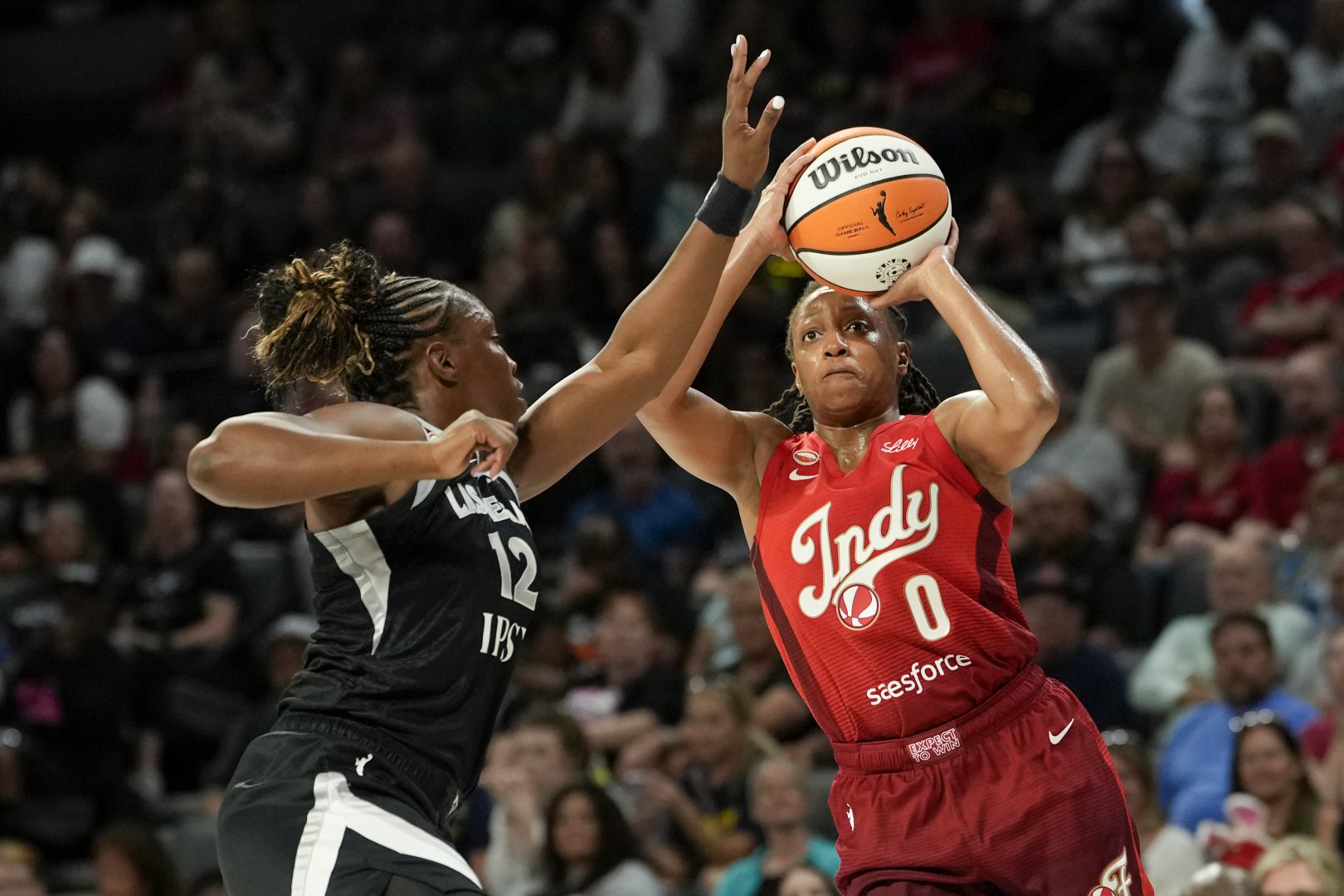
The message followed a second-quarter possession involving Gray and Clark.
Gray drove into the paint while Clark defended her. The players made contact before Gray attempted a short shot.
Officials called a shooting foul on Clark. They then reviewed the play for a possible hostile act.
Replay supported the original ruling. The contact remained a common foul, and Gray made both free throws.
Still, the review placed another WNBA possession under a national microscope. Some viewers accused Clark of exaggerating the contact. Others argued officials again failed to protect her.
Then Gray received racist abuse.
Hammon questions review culture
Aces coach Becky Hammon criticized the growing number of replay reviews after the game.
“I think it’s exhausting when they go to the review every time,” Hammon said. “These games are getting longer and longer.”
Hammon also said frequent reviews were “encouraging more drama.”
“Somebody gets hit, and it’s like, take them to the hospital,” Hammon said. “Then they jump up and they’re fine.”
Hammon stressed that her concern extended across the league. She did not limit it to Sunday’s game.
Replay can correct serious mistakes. However, stopping play to inspect routine contact can make an incident appear more sinister than it was.
That effect matters in the WNBA’s current climate. Almost every physical play involving Clark now enters a larger argument about officiating, race and player safety.
Officiating adds fuel
Questions about officiating have helped feed that argument.
During a June 24 game, Phoenix Mercury forward Alyssa Thomas made contact with Clark’s throat during a loose-ball sequence. Officials did not call a foul.
The league reviewed the play afterward. It assessed Thomas a Flagrant 2 foul and suspended her for one game.
That decision showed why postgame review can matter. Officials missed significant contact, and the league corrected the call.
The Gray review presented the opposite issue. Officials stopped the game to examine contact that remained a common foul.
One serious play went uncalled until a later review. Another received immediate scrutiny without producing an upgrade.
There is no simple fix. Officials work at full speed, and replay serves a purpose.
Still, clearer standards and more consistent execution could reduce confusion. Otherwise, each review can invite viewers to assign malicious intent.
Clark condemns harassment
Clark has separated concerns about officiating from abuse directed at other players.
After Thomas said she and her family received racist abuse and death threats, Clark said harassment and hate were unacceptable. She said that standard applied to opponents, teammates and coaches.
Clark also criticized personal attacks on players’ character. At the same time, she called for better officiating and stronger protection for players.
Those positions do not conflict.
Fans can believe officials missed a foul. Clark can believe dangerous contact deserved discipline. Neither position excuses threats or racist messages.
Clark also cannot control every account using her name. Her comments made clear that she does not condone that behavior.
The sender’s motive is unknown
Social media users later tried to identify the account behind Gray’s message. Some also alleged that the account belonged to a sports bettor.
Dice City Sports could not independently verify the account holder’s identity, employment or motivation. This story therefore does not name the alleged person.
It remains unclear whether the message came from a Fever fan, an angry bettor, a troll or someone seeking attention.
That uncertainty matters. The league’s toxic online environment cannot be reduced to one fan base.
The sender’s loyalty is not the heart of the story. The willingness to send racist abuse is.
Betting raises another question
The WNBA openly promotes sports wagering through its official website.
Its news page has featured BetMGM award odds and DraftKings betting predictions. The site also maintains a dedicated betting section.
That does not prove the person who messaged Gray was a bettor. It also does not make the league responsible for the message.
However, leagues that promote gambling must confront the abuse players receive from people who reduce performances to betting outcomes.
The problem is broader than traditional fandom. Fans, gamblers, trolls and political actors can all join the same online pile-on.
Lawmakers enter the debate
The conversation became more political before the Aces and Fever played.
Eleven Republican lawmakers sent WNBA commissioner Cathy Engelbert a letter demanding greater accountability for what they described as repeated violence against Clark. Rep. August Pfluger of Texas led the effort.
The letter raised the possibility of federal scrutiny. It was not proposed legislation, and Congress had not opened a formal investigation.
Still, the intervention added another political layer to disputed plays involving Clark. It also came while Black WNBA players were reporting racist abuse connected to incidents involving her.
Gray’s screenshot made that contrast harder to ignore.
A divide beyond two players
The online divide hardened around Clark and Angel Reese during their college careers.
Their basketball rivalry became something larger online. Fans, influencers and political commentators assigned racial and cultural meaning to fouls, celebrations and postgame comments.
That hostility followed both players into the WNBA. It has since spread beyond them.
Thomas became a target after her contact with Clark. Gray became one after Sunday’s review.
The players did not create this environment. Clark and Reese are not responsible for every account using their names to attack someone else.
However, players continue to absorb the consequences.
Basketball criticism belongs in professional sports. Racist abuse does not.
The league has not addressed Gray directly
The WNBA previously condemned hate after Thomas criticized the league’s response to threats against her. It also said it was working to protect players from online abuse.
However, Dice City Sports found no statement on the league’s website or official X account specifically addressing the message Gray shared as of publication.
That does not establish what the WNBA may have done privately. It also does not erase its previous statements about harassment.
Still, Gray’s post created another opportunity for a direct response.
The league cannot control every social media account. It can support targeted players, press platforms for action and explain its review standards more clearly.
Player safety exists on and off the court.
Officials must identify dangerous contact as consistently as possible. Meanwhile, the league must address the threats and slurs players receive afterward.
Gray shared one message. The environment behind it is much larger.
The most troubling part of Sunday’s sequence was not the contact between Gray and Clark. It was the belief that one disputed possession gave someone permission to reduce Gray to a racial slur.
Related stories
Welcome to Dice City Sports — where we provide premium, exclusive, up-to-date news and analysis surrounding the Las Vegas sports scene. Follow along on social media, and check back for new articles daily!
Dice City Sports editor Mark Hebert covers the Las Vegas Aces, Vegas Golden Knights, Las Vegas Raiders, Athletics, and UNLV baseball and softball. He has 24 years of journalism experience, is also a senior reporter at Exhibit City News, and previously covered the Dallas Stars and Texas Rangers. Follow him on X or connect on LinkedIn.