

The 2026 NFL Draft hits Pittsburgh April 23-25, and the Raiders sit on the No. 1 overall pick with a franchise reset staring them in the face.
The Raiders’ in-house draft crew decided to play the weekend out early on the team’s official YouTube channel.
On the Raiders NFL Draft Podcast, Bucky Brooks and Rhett Lewis ran a full seven-round mock using the PFF Mock Draft Simulator, a tool that lets you run the entire board, watch position runs form, and see how quickly options disappear once the picks start flying.
Here’s the mock, pick by pick, with the reasoning Brooks and Lewis talked through.
The software: why PFF’s simulator works for this exercise
The PFF Mock Draft Simulator isn’t just a list of names. It builds in board movement, positional value swings, and the kind of “do we take need or best player?” tension teams live with on draft weekend. Brooks and Lewis also acknowledged the reality that 10 picks is a lot, and a real front office often uses that volume to move.
Pick 1: Make it official
No. 1 overall: Fernando Mendoza, QB, Indiana
Mendoza was the easy button in their mock. The bigger conversation was what comes next: earning QB1. Brooks framed it as a meritocracy and said a veteran quarterback helps the rookie learn the rhythm of an NFL offense before taking over. Lewis echoed the same point: Mendoza would prefer to earn it, not get handed the keys.
Pick 2: Protect the new quarterback
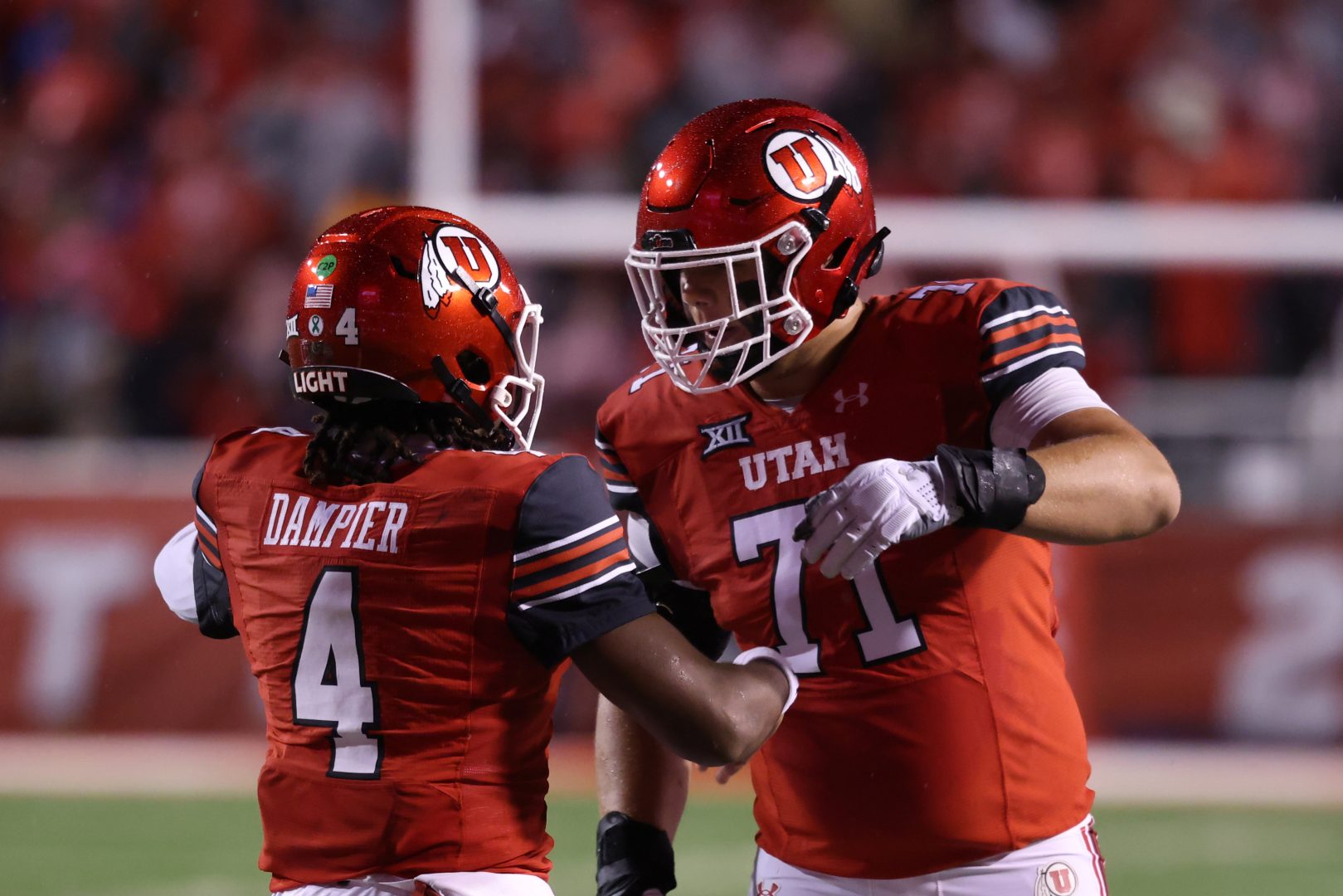
Round 2: Caleb Lomu, OT, Utah
This was the first real fork in the road. Wide receiver tempted them, but the conversation kept circling back to scarcity. Tackle felt like the bigger drop-off later, and Lomu’s athletic profile fit the movement and zone concepts the new staff wants to lean on. The logic was simple: secure the edge while the value is still there.
Pick 3: Give Mendoza a perimeter answer
Round 3: Malachi Fields, WR, Notre Dame
With the tackle handled, the mock pivoted to playmakers. Fields won the debate because Brooks and Lewis wanted a receiver who can live outside, win matchups, and become someone the offense builds touches around. They framed it as a needed piece, not a luxury.
Day 3 opens: Fix the defense, then keep feeding the trenches
Round 4: Malik Muhammad, CB, Texas
The first fourth-round pick went to the secondary. Muhammad stood out in their discussion for fit and for what he offers behind established corners. Lewis also highlighted his recall and detail when talking matchups, a sign of how he processes the game.
Round 4: Chris McClellan, DT, Missouri
Next came an interior defensive body. Brooks described Day 3 as the time to add developmental players who can grow into roles, and McClellan fit that bucket as a young lineman who can work his way into snaps.
Round 4: Beau Stephens, G, Iowa
The third fourth-rounder brought the mock back to offense with a guard they viewed as a scheme match. Iowa’s run game background mattered in their eyes, and Stephens checked the “fits what we want to do” box as depth that could develop.
Round 5: A second back behind Jeanty
Round 5: J’Mari Taylor, RB, Virginia
At this point, Brooks looked at the room behind Ashton Jeanty and called it an open opportunity. Taylor became the pick because he offered production, a workload that suggests durability, and a profile that could slide into a rotation.
Round 6: Two swings at safety
Round 6: Jalen Stroman, S, Notre Dame
The first sixth-round pick focused on depth and development. Stroman was framed as a player with experience and versatility who could settle into a defined role and grow.
Round 6: Lorenzo Styles Jr., DB, Ohio State
Then came the speed pick. Lewis joked that if the ghost of Al Davis is anywhere near the room, Styles ends up in silver and black. The reasoning was traits: fast, explosive, and useful in multiple ways even if the role starts on special teams.
Round 7: Traits over certainty
Round 7: Harold Perkins Jr., LB/EDGE, LSU
The final pick was the classic seventh-round gamble. Brooks called it a dart throw on athleticism and explosiveness, and both hosts acknowledged the role fit question. Still, the price is low at that point, and the upside is obvious if the staff can find a job for him.
What the mock says about how they see the Raiders
The theme never changed: draft Mendoza, then build his runway. The next two picks went directly to protection and a perimeter target. After that, the board added defensive depth and more trench bodies, then finished with speed and upside swings late.
It’s a clean plan in a clean simulator.
Now comes the real version, with the clock running and the board moving for keeps.
Related stories
Raiders draft countdown: Marquette King is best No. 7 in team history
Raiders draft countdown: Ray Guy is best No. 8 in team history
Welcome to Dice City Sports — where we provide premium, exclusive, up-to-date news and analysis surrounding the Las Vegas sports scene. Follow along on social media, and check back for new articles daily!
Dice City Sports editor Mark Hebert covers the Vegas Golden Knights, Las Vegas Raiders, Athletics, and UNLV baseball and softball. He has 24 years of journalism experience, is also a senior reporter at Exhibit City News, and previously covered the Dallas Stars and Texas Rangers. Follow him on X or connect on LinkedIn.