The Athletics do not open the 2026 season hoping their lineup can surprise people. They open it expecting this group to matter.
That shift shows up in the room and in the message. Earlier in camp, manager Mark Kotsay said the players who have been here “have definitely grown up.” He also made the standard clear from the start.
“Let’s go win a championship.”
That is a bold line in March. But it also fits where the Athletics are now. This is no longer just a lineup built on promise. It is a lineup with a Rookie of the Year winner, another young infielder who nearly joined him atop that vote, multiple 25-plus home run bats, and enough returning production to believe it can be a real strength heading into Opening Day in Toronto.
The middle of the order already has thump
Nick Kurtz is the obvious place to begin. He hit .290 with 36 home runs, 86 RBIs and a 1.002 OPS in 2025, then followed that by winning American League Rookie of the Year. That is not prospect shine anymore. That is franchise-player production.
But Kurtz is not carrying this group alone.
Tyler Soderstrom hit 25 home runs with 93 RBIs last season. Shea Langeliers added 31 homers, 72 RBIs and an .861 OPS. Brent Rooker hit 30 home runs with 89 RBIs and again gave the lineup a proven middle-order threat. Those are not hypothetical breakout numbers. They already happened. That is what makes this group feel different from some earlier versions of the A’s lineup. The power is no longer theoretical.
Soderstrom, in particular, looks like a player who has moved beyond the “young hitter with upside” stage. He now looks like part of the foundation. Langeliers remains one of the more valuable power bats on the roster because he brings it from behind the plate. Rooker still changes the tone of a game with one swing.
Wilson gives the lineup balance
Jacob Wilson may be the most important complement to all that power. He hit .311 with 13 home runs and 63 RBIs in 2025, then finished second in AL Rookie of the Year voting behind Kurtz. His value is different from the sluggers around him, but not smaller. He puts the ball in play, controls at-bats and gives the lineup a steadier rhythm.
That matters for a group that can otherwise tilt toward damage-or-nothing offense.
Wilson does not need to lead the club in home runs to be central to the lineup. He just needs to keep doing what he already showed he can do. When Kurtz, Soderstrom, Langeliers and Rooker are hitting around him, Wilson’s contact profile becomes even more valuable.
Butler and McNeil help shape the whole thing
Lawrence Butler is one of the most important variables in the lineup. He played 152 games last season and finished with 21 home runs, 63 RBIs and 22 stolen bases, but he entered camp coming off offseason right knee surgery. The Athletics planned to manage his workload early in the season, and that gives his opening role extra importance. If Butler is healthy enough to be fully himself, the A’s add another impact bat with speed and range.
Jeff McNeil gives the group a different kind of value. The former NL batting champion hit .243 with 12 home runs and 54 RBIs last season, but his broader appeal is stylistic. He lengthens at-bats, puts balls in play and gives the lineup a different shape than the younger power hitters around him. The Athletics do not need him to be the star. They need him to make the whole thing more playable from top to bottom.
Muncy and the rest of the depth matter
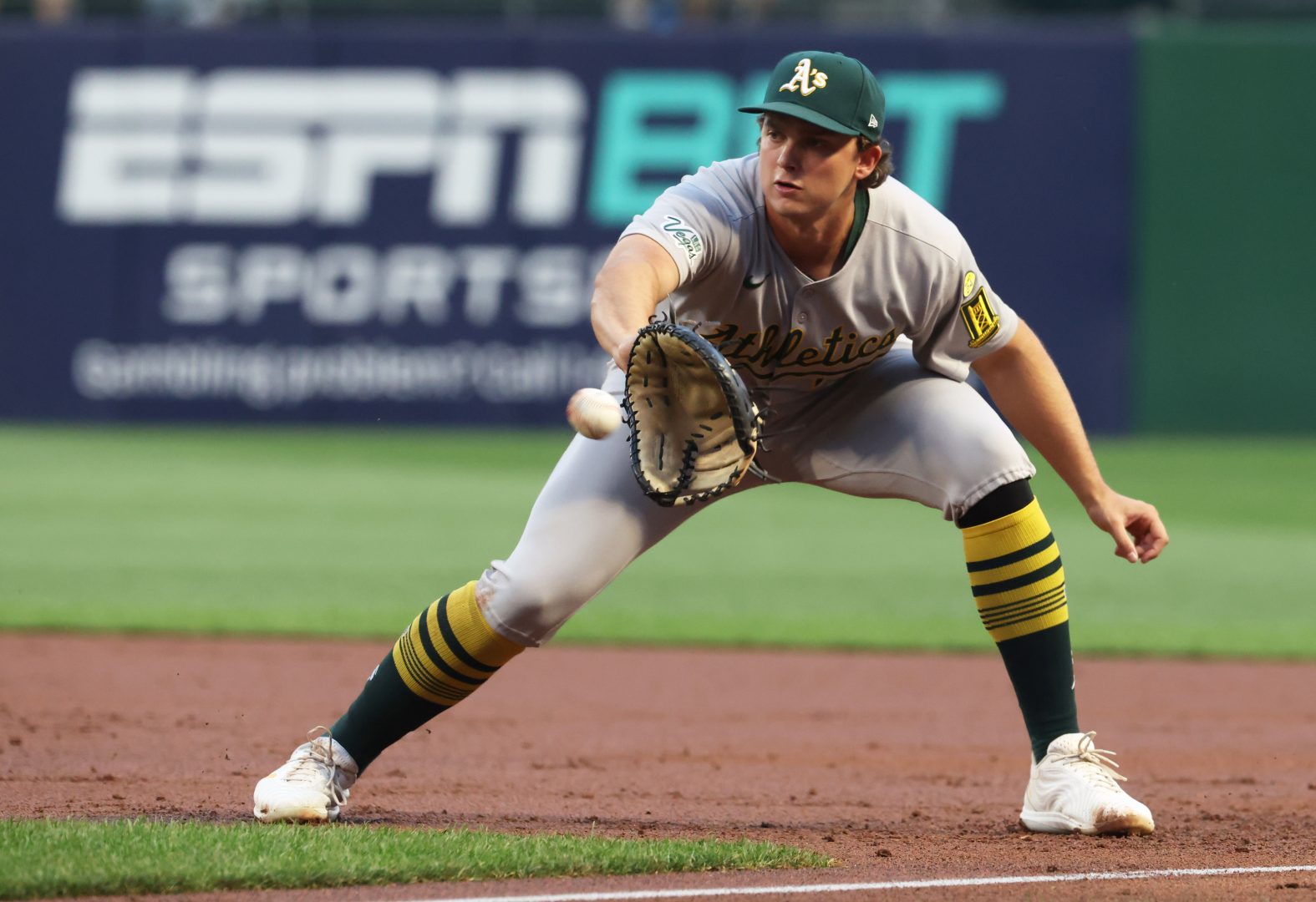
The spring winner was Max Muncy. He earned the starting third-base job after a big camp, and that may be one of the more quietly important developments on the roster. The A’s do not need him to remain a spring storyline. They need him to become a useful everyday player at a position that still needed clarity.
Denzel Clarke still brings athletic upside and center-field value, even if the bat remains the bigger question. Austin Wynns gives the club experienced catching depth behind Langeliers. And because the roster has more overlap now, Kotsay has flexibility to rotate designated hitter at-bats, mix and match his outfield and ease players into heavier workloads when needed.
This lineup is supposed to be a strength
There are still fair questions here. The younger hitters will need to keep adjusting once the games count. The lineup can still get swing-and-miss heavy. And opening in Toronto against a team coming off an AL pennant is not exactly a soft landing.
Still, the Athletics should walk into Opening Day believing this part of the roster can compete.
They have power in Kurtz, Soderstrom, Langeliers and Rooker. They have contact in Wilson and McNeil. They have athleticism in Butler and Clarke. They have another possible step forward in Muncy. Most of all, they have a lineup that finally looks like it belongs together.
That may be the clearest sign of where the Athletics are entering 2026. The talent has been visible for a while. Now the expectations are, too.
Related stories
A’s pitching depth starts with Severino in Toronto
Athletics Opening Day countdown: Eric Chavez is best No. 3 in A’s history
Welcome to Dice City Sports — where we provide premium, exclusive, up-to-date news and analysis surrounding the Las Vegas sports scene. Follow along on social media, and check back for new articles daily!
Dice City Sports editor Mark Hebert covers the Vegas Golden Knights, Las Vegas Raiders, Athletics, and UNLV baseball and softball. He has 24 years of journalism experience, is also a senior reporter at Exhibit City News, and previously covered the Dallas Stars and Texas Rangers. Follow him on X or connect on LinkedIn.