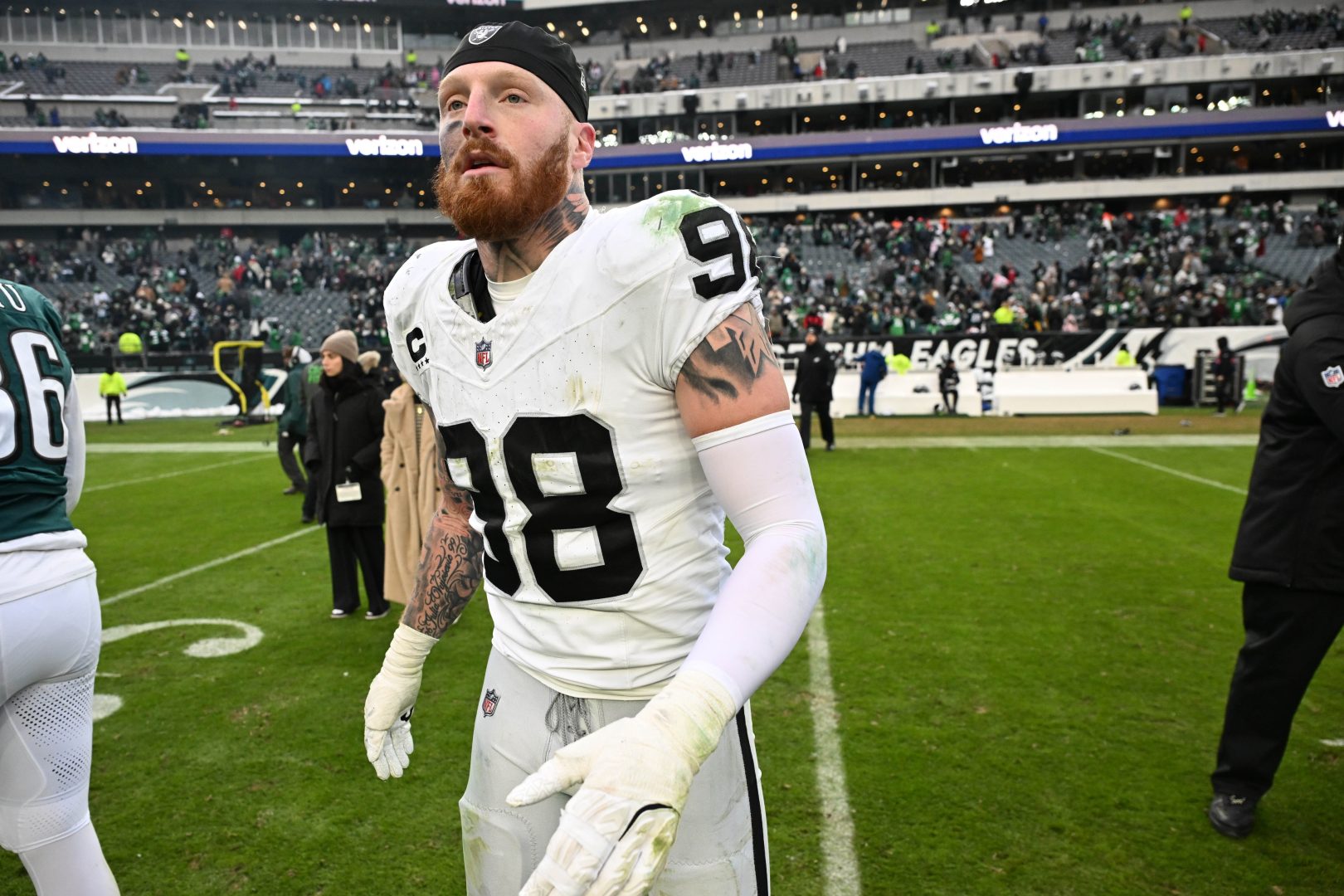
A few weeks ago, a team source indicated Crosby’s chances of returning were “relatively small,” which fueled league-wide chatter. However, the situation appears more layered than that initial comment suggested.
Crosby Isn’t Forcing the Issue
According to reports, Crosby does not plan to request a trade. That matters. He reportedly maintains a strong relationship with Raiders owner Mark Davis, which complicates any narrative that a split is inevitable. At the same time, Crosby has made it clear he wants to win and whether Las Vegas is positioned to contend in 2026 remains uncertain.
The Market Reality
There are also business realities involved. One league executive questioned the logic outright: “Why would you trade him? He’s a premier player at a premier position.”
Elite edge rushers in their prime are rarely moved unless:
And that’s another wrinkle Crosby may not command a “Micah Parsons-level” haul (two first-round picks plus a key player). If the return isn’t franchise-altering, the Raiders gain little by moving him.
An NFC executive added: “I think the price is too high. I’m not sure they really want to move him at this point. But that could change.”
Why Trading Him Doesn’t Add Up (Yet)
Even amid roster turnover and coaching changes, Crosby remains:
-
The emotional leader of the defense
-
One of the league’s most productive pass rushers
-
A culture-setting presence
For a team potentially breaking in a young quarterback or reshaping its offense, having a defensive cornerstone can keep games competitive. If Las Vegas is even marginally improved, Crosby is the type of player who can swing close contests.
What Would Change the Equation?
A trade only makes sense if:
-
The Raiders receive multiple premium draft assets
-
The front office commits fully to a multi-year rebuild
-
Or internal evaluations shift dramatically
Right now, none of those conditions appear imminent.
For the moment, the noise has quieted.
But in the NFL, “quiet” in February doesn’t always mean quiet in April.